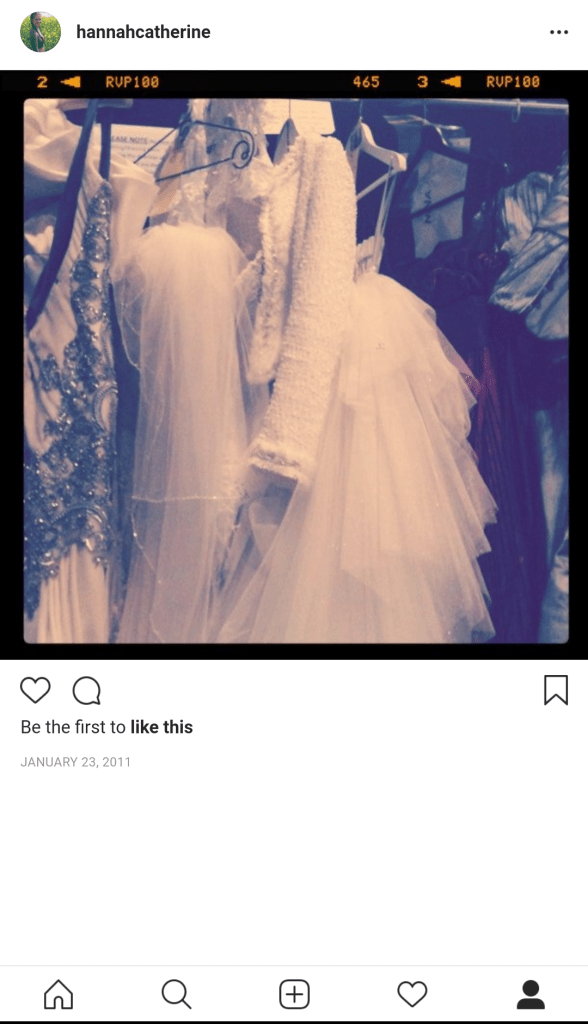
On January 23rd 2011, I uploaded my first photograph onto my Instagram account. I was excited to start a new form of social media and keep up with everything. I have always loved photography, art and being creative, so I thought Instagram would be a perfect opportunity to show my friends, family and followers all about myself and what my interests are. As Instagram became more popular, I quickly started to notice my screen time increasing. My mental state started to plummet and I began to feel as if my life wasn’t enough. I would compare myself to others and had an unrealistic view of reality.
When the social media influencer title was invented, I quickly watched as the online world completely changed.
Instagram was developed by Kevin Systrom and Mike Krieger in San Francisco in 2010. As there were many other platforms already similar at the time, the app was designed to capture images and tell stories through captions. The name Instagram was derived from the word telegram – which generates quick messages to the users. By the first year, there were 10 million users on the app. Now there are over 1 billion users uploading worldwide.
Every single morning I would open the app as soon as I woke and began my day. I became obsessed at scrolling and checking posts every few hours. It wasn’t healthy in any sense and I forgot how beautiful real life actually was. Eventually I saw what it was really doing to people and I watched them change.
It ended up being about how many likes and followers a person had, finding the best hash tag, using the perfect filter and how aesthetic a photograph was. I just couldn’t see the point anymore. Everyone was competing for the best photograph and comments were becoming nasty for no reason at all.
Instagram results in passive use and social comparison. Passive use is when users monitor known or unknown accounts without engagement. This isn’t beneficial to their health, as envy and jealousy can occur (Verduyn et al., 2017, p. 281). Social comparison is an outcome of envy and consequently alters a person’s state of mind (Festinger, 1954). Social media users are more likely to experience feelings of inferiority, hostility and resentment according to Smith and Kim (2007, p. 49).
A few articles posted below on my TWITTER account explain the pros and cons of Instagram and discuss the general mental health issues within the app:
Social media use, especially Instagram has exploded over the last few years. There are undeniable health effects for the individual and society as a whole. Some users may not think too deeply about the app and use it once in a while, while others will open Instagram every hour, and develop low self-esteem, anxiety or even depression because they become obsessed with being liked. They try to portray an image of themselves they think the public will enjoy. Life dissatisfaction and social isolation becomes very common with Instagram users. Instagram also has the greatest negative impact on body image and sleep interruption. The list goes on…
Everyone would tell me what a dream career it would be – then influencers open up to the world and say they feel more alone than ever.
Eventually I completely lost interest in the app and deleted my account. I had to remind myself who I was, as I was trying to be someone I’m not. People are shocked and almost disappointed when they find out I’m not ‘connected’. But are you ever really connected on Instagram?
Currently my online social media consists ofFACEBOOK and TWITTER. I’m more interested in networking, sending a weekly funny meme to a friend and searching for articles that interest me. My online persona shows more of myself, and what I believe in. I’m still trying to post honest opinions to Twitter and share my thoughts when I disagree with something, but it’s hard to open up in a world full of opinions.
I’m sure another social media app will be invented in the near future, and maybe people will be kinder and things will change. But life is too short to focus your whole life around Instagram, which will eventually become obsolete. You’re not really missing out on much – everything exciting begins at your front door.
Festinger, L. (1954). A theory of social comparison processes. Human Rations, 7, 117–140.
Smith, R. H., & Kim, S. H. (2007). Comprehending envy. Psychological Bulletin, 133(1), 46–64.
Verduyn, P., Ybarra, O., Résibois, M., Jonides, J., & Kross, E. (2017). Do social network sitesenhance or undermine subjective well-being? A critical review. Social Issues and Policy Review, 11(1), 274—302.

 Hannah Catherine